
Why turbo work needs a wider view
The surrounding system gets checked
Boost pipes, controls and oil supply can affect the diagnosis just as much as the turbo.
Finding the underlying cause
We look for the issue that led to the damage, not only the damaged turbo itself.
Testing follows the repair
Post-repair checks help confirm the vehicle is making power and running as expected.
Thoroughly investigation your vehicle issues
A car that has lost power, started smoking, begun whistling strangely or dropped into limp mode can make the turbo the obvious suspect. Sometimes it is. Sometimes the fault sits with boost pipes, hoses, controls, oil supply or another related engine system. With Rapid Auto Repair, we inspect the wider setup before deciding that the turbo itself has failed. That step matters because fitting parts on assumption can leave the real cause untouched, which is frustrating enough without repeating the problem later.

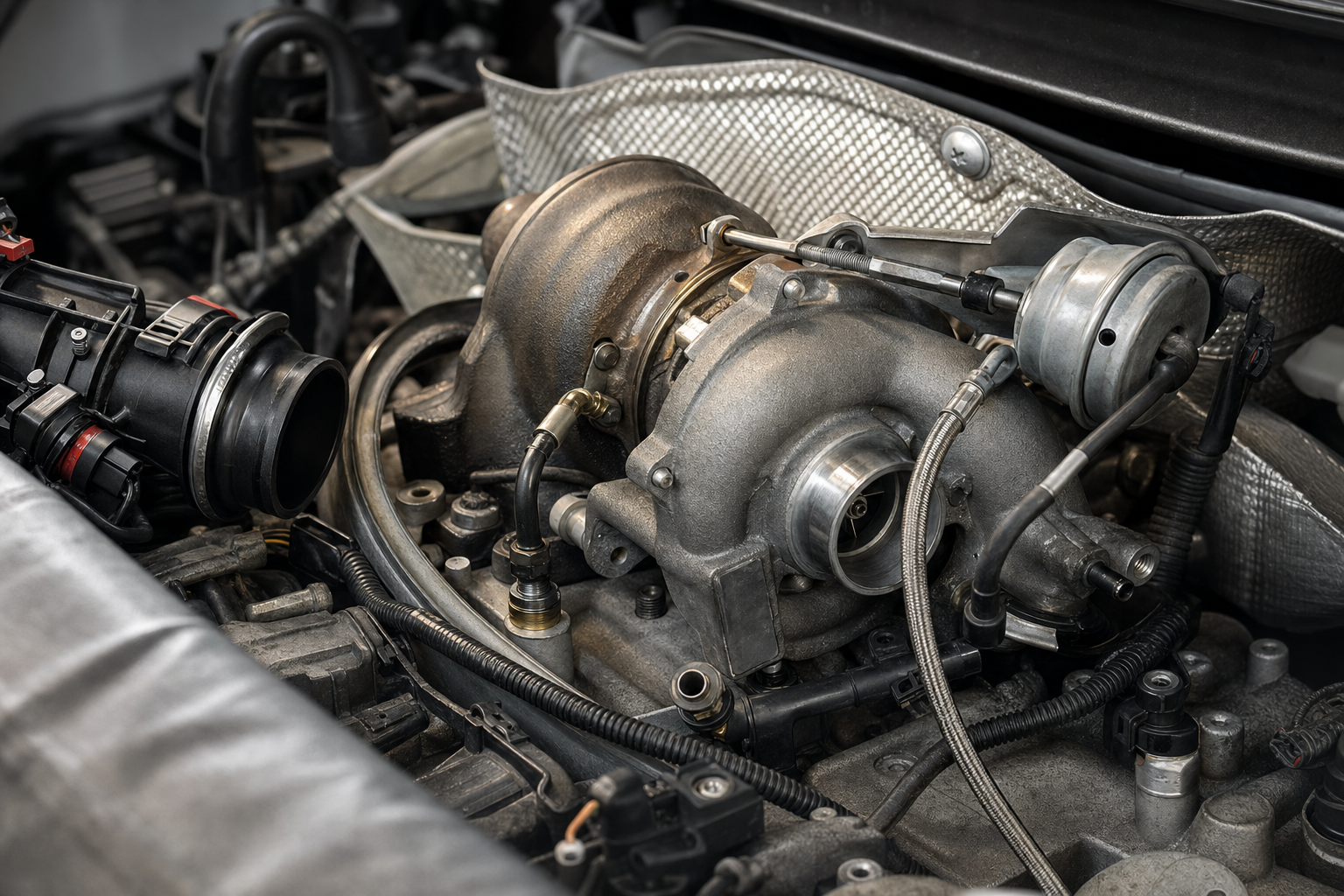
Repair or replacement based on condition
Once the turbo and surrounding systems have been checked, we can judge whether repair or replacement is the sensible route. We also look for the oil, airflow or engine-related issues that may have contributed to the damage in the first place, because leaving those behind can put the replacement unit at risk as well. After the main work, we test the vehicle to confirm that the system is behaving as it should. The aim is not just to swap a part, but to restore proper operation.
Frequently asked questions
What signs usually point to turbo trouble?
Reduced power, excessive smoke, unusual whistling, warning lights and limp mode are all common signs. They do not prove the turbo is the only fault, though, which is why we inspect the related hoses, controls and engine systems before deciding what the repair route should be.
Can a turbo be repaired instead of replaced?
Sometimes, yes. It depends on the turbo condition and the exact nature of the fault. In other cases, replacement is the safer or more sensible answer. The important part is checking the unit and the surrounding system properly before choosing one route over the other.
Why do you check oil and airflow with turbo faults?
Because turbo damage is often linked to wider issues. Poor oil supply, contamination, leaks or airflow problems can all contribute to failure. If those causes are not identified, even a new turbo may be placed under the same conditions that damaged the old one, which helps nobody.